Understanding Equipment Risk: A Clearer Starting Point for Maintenance Decisions
A practical conversation about equipment risk can help teams understand the consequences of failure, test recovery assumptions, and agree on clear next steps.
Welcome to February from APEX KAI. With the year underway, it’s a good time to step back from daily demands and consider where your operation may be carrying unnecessary risk.
In January, we discussed moving beyond the familiar maintenance mindset of “if it isn’t broken, don’t fix it.” That raises a reasonable question:
With limited people, time, and budget, where should we begin?
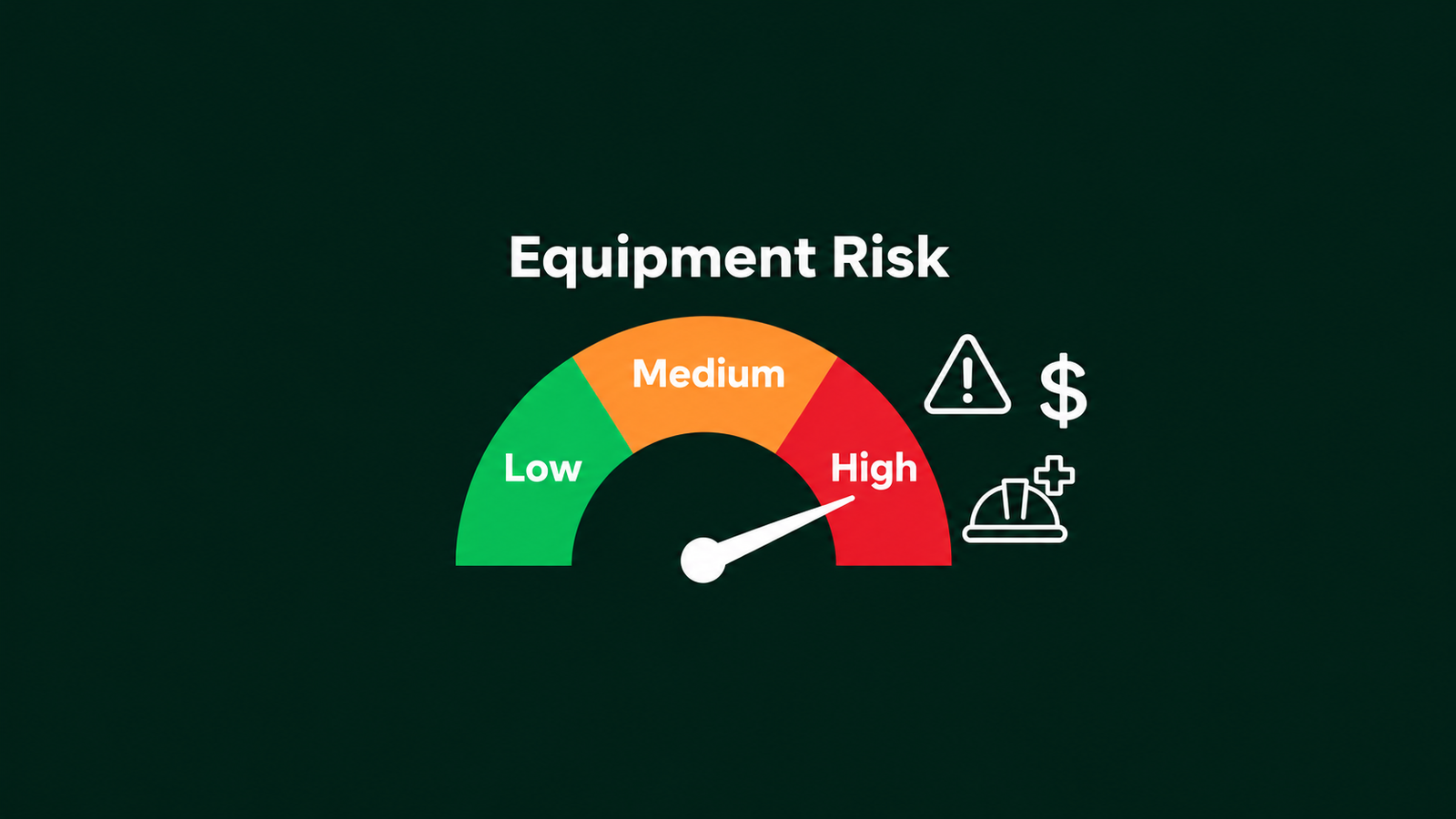
A practical starting point is a conversation about equipment risk.
That conversation brings together what your team knows about the equipment, what depends on it, and how prepared the operation would be if something went wrong. It gives plant managers, reliability leaders, and executives a shared basis for discussing maintenance priorities.
Start with what a failure would mean
A list of equipment tells you what the business owns. It does not necessarily tell you what the business depends on.
A relatively inexpensive component may support an important production step. A large, costly machine may have a backup available. Two similar pumps may perform very different jobs.
Consider a hypothetical example.
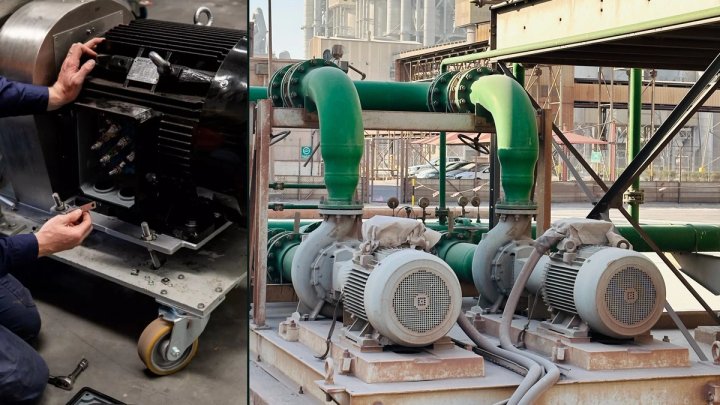
One pump serves a process with an available standby unit. Another supports a production line with no practical alternative. Both are operating normally today.
Their current operating condition may look similar, but the consequences of losing them could be very different.
That is why an initial risk discussion should include a straightforward question:
If this equipment became unavailable, what would happen next?
Would production stop? Could output continue at a reduced rate? Would product quality be affected? Could the problem affect people, other equipment, or customer commitments?
The answers depend on your operation—and on the people who understand it.
Separate importance from current condition
Equipment can be important to production and still be operating reliably. Other equipment may have recurring problems but limited business impact.
Those are different situations.
Understanding the consequences of failure helps explain why an asset matters. Understanding its condition and maintenance history helps the team assess the concerns that may need attention.
Useful discussion points include:
- Have operators noticed changes or recurring difficulties?
- What do inspections and maintenance records show?
- Are the same problems returning after repairs?
- Are there unresolved concerns that need investigation?
- Where is information missing or out of date?
Age alone does not answer these questions. Neither does the fact that a machine is still running.
The aim is to bring available evidence into the discussion and make uncertainty visible.
Ask how prepared the operation really is
Another part of equipment risk is the ability to respond.
A team may know how to repair an asset but still face a lengthy interruption because a replacement part is unavailable. A spare may be listed in inventory without anyone having recently confirmed its condition. A backup may exist, but the operating team may be unsure when it was last checked.
Ask your team:
- Is there a usable backup or another way to continue operating?
- Are necessary parts available, and have lead times been confirmed?
- Is the maintenance history accessible?
- Does the response depend heavily on one person’s knowledge?
- Who would coordinate decisions between maintenance and production?
These questions can reveal practical improvements before any new technology is considered.
They also help distinguish a documented recovery plan from an assumption that someone will know what to do.
Bring the right people into the conversation
Maintenance sees repair history and recurring faults. Operators see how equipment behaves during daily work. Production understands scheduling constraints and downstream dependencies. Purchasing knows which parts have become difficult to obtain.
Leadership needs that combined view to make informed decisions about resources.
A useful assessment gives those perspectives a place to meet. Differences in understanding are worth examining.
For example, maintenance may believe a standby unit is available while production knows it cannot support the required output. Resolving that difference may be more valuable than assigning the equipment a numerical score.
Where a concern involves safety or environmental requirements, bring it into the organization’s established review process with the responsible specialists.
Finish with a practical next step
An assessment becomes useful when it leads to a decision.
For each concern discussed, record:
- What is known.
- What still needs to be confirmed.
- The next action.
- Who owns that action.
- When the team will review it.
The next action might be checking a spare, investigating a repeat problem, updating an equipment record, or confirming a supplier’s lead time. It might also be gathering better condition information.
Start with a manageable group of equipment or one production area. Use what the team learns to improve the next discussion.
Give information a clear purpose
For leaders considering IIoT, condition monitoring, or AI, a risk discussion can help clarify what information would be useful and which decisions it should support.
For example: would earlier information about a developing concern help the team plan work? Would accessible maintenance history improve continuity between shifts? Would clearer ownership help prevent an identified issue from being overlooked?
These questions connect technology evaluation to an operational need.
That connection matters to APEX KAI’s work in bringing equipment condition information, maintenance workflows, and asset knowledge together. The people responsible for the operation provide the context; connected information can support their decisions and follow-through.
A useful question for February is: Where are we relying on assumptions about our equipment, and what would help us replace those assumptions with a clearer understanding?
Further reading: the U.S. Department of Energy’s Operations and Maintenance guidance.