A New Year, a Better Maintenance Approach: Moving Beyond Run-to-Failure
Start 2026 with a practical approach to moving beyond reactive maintenance. Prioritize critical equipment, clarify responsibility, and evaluate IIoT and AI against real operational needs.
Happy New Year from APEX KAI. A new year brings an opportunity to look at familiar challenges with fresh eyes. For plant managers, reliability leaders, and executives, one question deserves attention:
How much of our maintenance activity is planned—and how much is decided by the next breakdown?
“If it isn’t broken, don’t fix it” is a familiar way of thinking about equipment. When production is running and budgets are tight, leaving a working machine alone can feel like the practical choice.
But equipment that is still operating may already need attention. Waiting until it stops can leave the business with fewer options about when to act, how to prepare, and how much disruption to accept.
Understanding the reactive cycle
Reactive maintenance means responding after equipment fails or can no longer perform as required. Deliberately choosing to operate an asset until it fails is commonly called run-to-failure.
The sequence is familiar: equipment stops, someone reports the problem, maintenance responds, and the team works to restore service. For critical equipment, the breakdown can become the plant’s immediate priority.
Reactive maintenance can involve less advance planning and lower initial spending on monitoring. But unexpected failures can bring production interruptions, difficult parts sourcing, and less predictable repair costs. IBM describes these tradeoffs in its reactive maintenance overview.
For leaders, the question is whether those tradeoffs are acceptable for each asset.
Choose where run-to-failure makes sense
Replacing a nonessential light bulb when it burns out may be reasonable. Taking the same approach with equipment that supports an entire production line deserves a different discussion.
Before accepting run-to-failure, ask:
- What happens to production if this asset stops?
- Could its failure affect people, product quality, or other equipment?
- Is a replacement or spare readily available?
- How long could the operation continue without it?
The purchase price of an asset does not tell the whole story. A relatively inexpensive component can still have a significant effect on production.
A modern maintenance approach begins by understanding those consequences and choosing the response deliberately.
Change the question your team asks
Instead of asking only, “Is the equipment still running?” begin asking:
“What do we need to know to decide whether this equipment needs attention?”
That information may come from operator observations, inspections, maintenance history, fluid analysis, or condition monitoring. Different equipment will need different approaches.
The goal is to give the team useful information early enough to assess a concern and prepare an appropriate response.
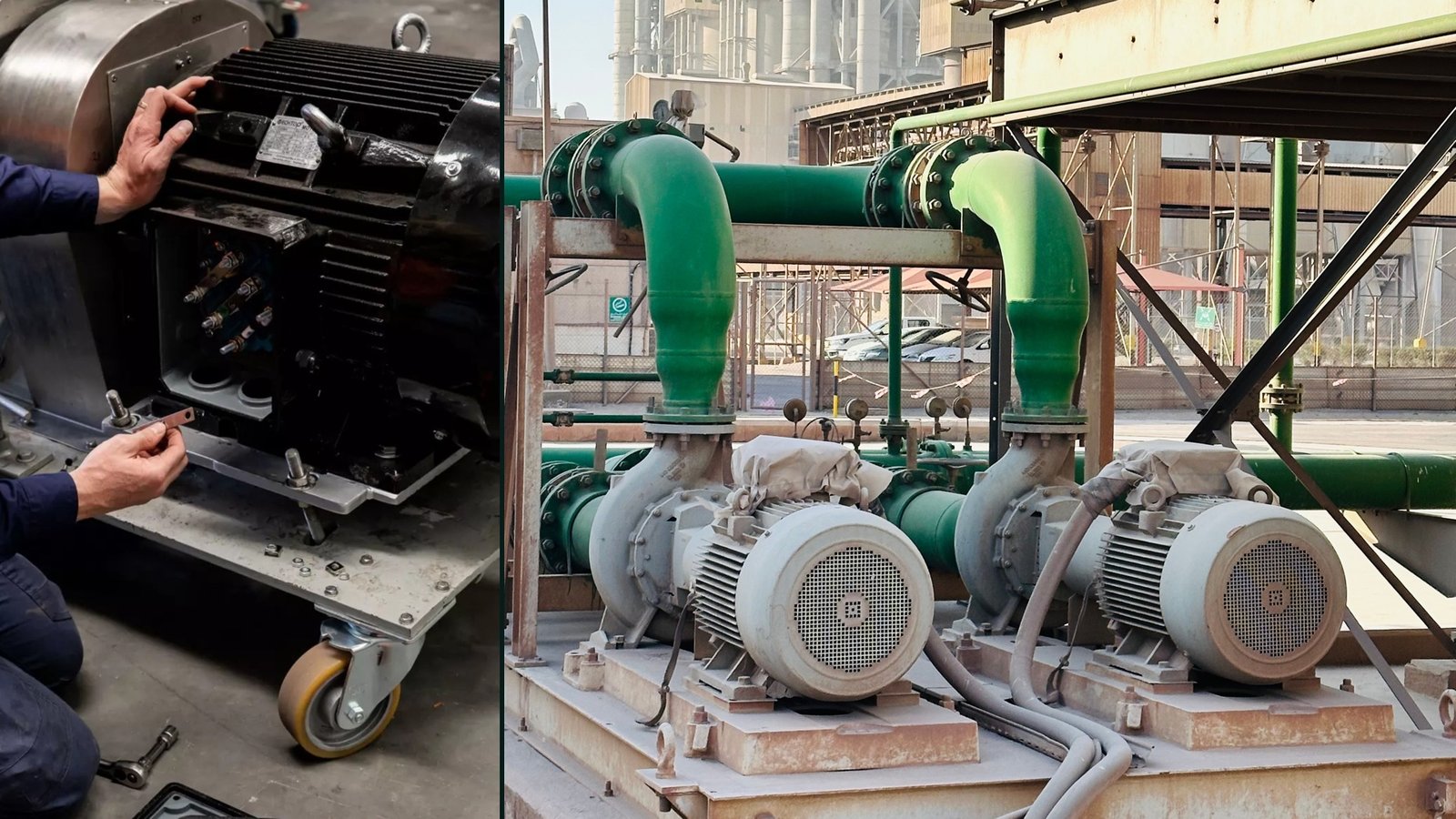
Consider a hypothetical production pump. If a developing concern is identified while the pump is still operating, the team may have an opportunity to investigate, check parts availability, and coordinate work with production. If the first clear indication is a complete stoppage, those decisions must happen under greater pressure.
Earlier information does not guarantee that a failure will be avoided. It can give people more room to make an informed decision.
Connect information to responsibility
Modernizing maintenance requires more than collecting information.
If an inspection identifies a concern, who reviews it? Who decides what happens next? Who coordinates the work with production? How does the next shift know what has already been done?
Make those responsibilities clear for your most important equipment. A useful starting process is straightforward:
- Record the concern against the correct asset.
- Assign someone to assess it.
- Decide the next action and its priority.
- Coordinate any required work.
- Record the outcome for future reference.
A report or alert becomes more useful when it leads to an owned, documented decision.
Give technology a clear job
For executives evaluating IIoT and AI, start with the operational problem you want to address.
Perhaps the team needs better visibility into critical equipment. Perhaps maintenance history is scattered across spreadsheets and individual knowledge. Perhaps concerns are being identified but follow-up is inconsistent.
Use that problem to guide the evaluation. Ask providers to demonstrate how their technology fits the people and processes already responsible for the work.
What information will it provide? Who will use it? What judgment remains with the team? What effort will implementation require?
These questions keep the investment connected to a business need.
Start with a manageable commitment
For the first quarter of 2026, choose a small group of important assets. Review the consequences of failure, the information available, and how concerns are handled today.
Then agree on a practical goal:
By the end of March, we will have a shared maintenance approach for five critical assets, a named owner for identified concerns, and a consistent record of follow-up work.
Track a few measures you can collect reliably, such as emergency work, repeat problems, and unresolved concerns. Establish a starting point before judging progress.
Moving beyond reactive maintenance begins with deliberate choices about where to focus, what information matters, and who acts on it.
That is a practical foundation for a more predictable year.
APEX KAI connects equipment condition information, maintenance workflows, and asset knowledge to support more informed maintenance decisions. Schedule a conversation about your priorities for 2026.